Sofia Lorenz · 17 September 2026
Shifting Sands: How Environmental Factors Shape Economic Activities in Portside Villages
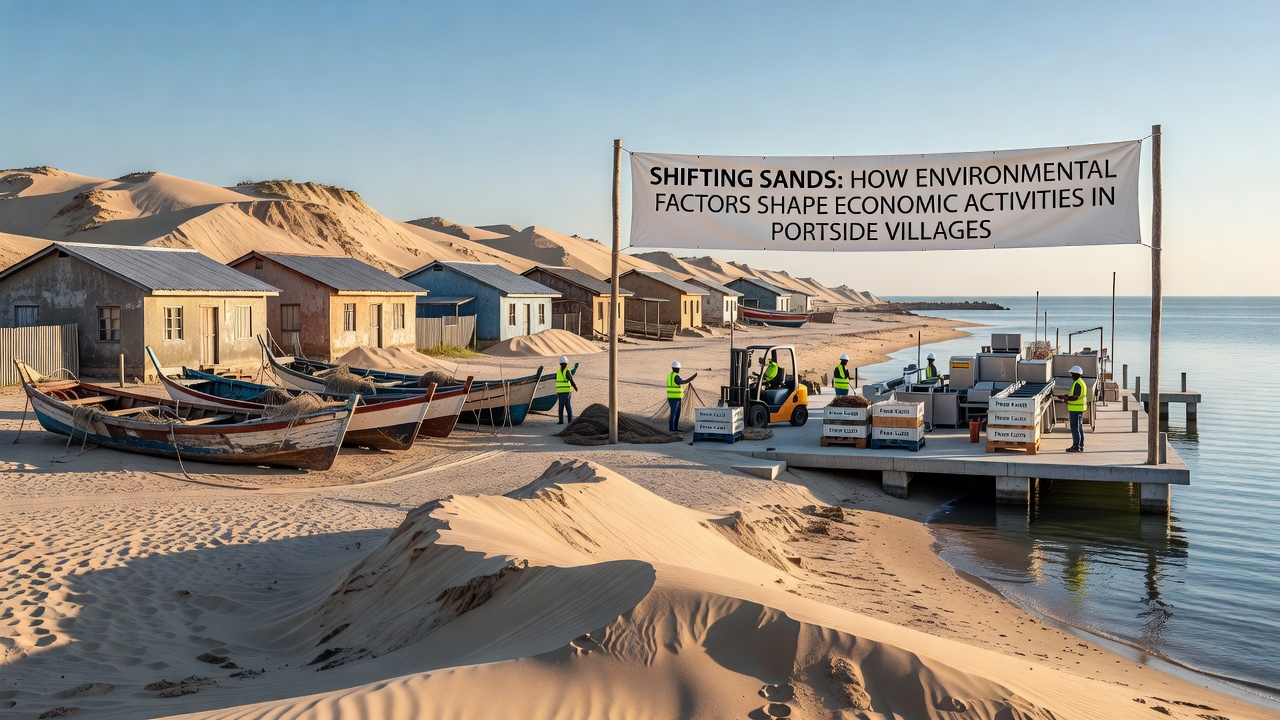
Portside villages depend on stable coastal conditions for fishing fleets, small-scale trade routes, and seasonal tourism, yet shifting environmental patterns continue to redefine what those economies can sustain. Researchers tracking long-term coastal data note that erosion rates, sea level trends, and storm frequency each exert measurable pressure on harbor infrastructure and nearshore fish stocks, while local operators respond by adjusting vessel sizes, landing sites, and target species.
Coastal Erosion and Harbor Viability
Shoreline retreat removes sediment that once protected breakwaters and docking facilities, forcing portside communities to dredge more frequently or relocate berths. In regions where annual erosion exceeds two meters, maintenance costs for small harbors have risen steadily according to records maintained by national coastal agencies. Fishers in such areas report longer transit times to safe moorings, which reduces daily catch volumes and raises fuel expenses. Observers note that villages able to shift landings to deeper, less eroded coves maintain steadier income streams than those locked into single, deteriorating inlets.
Sea Level Rise and Infrastructure Adjustments
Gradual increases in mean sea level compound erosion effects by allowing higher tides to reach previously dry storage yards and processing sheds. Data compiled through satellite altimetry and tide gauges show average global rises of approximately three millimeters per year over recent decades, with some coastlines experiencing accelerated rates due to land subsidence. Portside businesses that rely on ground-level cold storage or fuel depots must elevate platforms or install pumps, and these capital outlays appear most frequently in communities where seasonal tourism revenue previously funded upgrades. In September 2026, revised coastal hazard maps released by several government monitoring programs highlighted additional villages now projected to face annual flooding of low-lying wharves, prompting early planning for elevated boardwalks and relocated fish markets.
Storm Patterns and Seasonal Economic Cycles
More intense storm events shorten the reliable operating window for small vessels and disrupt tourism bookings during peak months. Historical records from meteorological services indicate that the frequency of named storms crossing mid-latitude coastlines has increased in several basins since the 1990s. When harbors close for days or weeks after high-wind episodes, fishers lose access to fresh markets and tourism operators face cancellations. Villages that diversified into value-added products such as smoked or canned seafood before storms arrive show faster revenue recovery than those dependent solely on daily fresh sales. Insurance premiums for waterfront property have climbed accordingly, and underwriters now tie rates to documented storm-surge exposure rather than historical averages alone.
Adaptation Measures Across Regions
Communities respond through a combination of hard structures and operational changes. Some install geotextile bags or rock revetments to slow sediment loss, while others adopt lighter, shallow-draft boats that can use temporary landing beaches when main harbors become unusable. European Environment Agency reports document cases where villages combined aquaculture pens with traditional capture fisheries to offset declining wild stocks linked to warmer nearshore waters. In North American coastal zones, the National Oceanic and Atmospheric Administration has tracked the gradual relocation of processing facilities farther inland, preserving jobs even as original waterfront sites become marginal. Australian coastal management studies similarly describe trials with floating pontoon systems that rise with tides, allowing continued access during moderate sea level increments without constant rebuilding.
Shifts in Livelihood Strategies
Economic data from portside districts reveal measurable movement toward mixed-income models. Households that once derived most earnings from capture fisheries now supplement with eco-tourism guiding, small-scale renewable energy maintenance, or seasonal construction tied to coastal defense projects. These transitions appear most pronounced where environmental agencies have published clear, regularly updated hazard assessments that help residents anticipate multi-year changes rather than react to sudden events. Where such information flows freely, investment in training programs for alternative marine trades follows more quickly.
Conclusion
Environmental factors continue to reshape the economic base of portside villages through measurable physical processes and resulting operational adjustments. Communities that monitor erosion, sea level, and storm trends while adapting infrastructure and livelihoods demonstrate sustained activity, whereas those facing repeated unaddressed disruptions experience contraction in traditional sectors. Ongoing data collection from multiple national and regional agencies supplies the factual foundation for these localized responses.